Icon

Your Guide to Design and Pop Culture in Tokyo

What Do These Colors Mean to You?

Rolling Stone

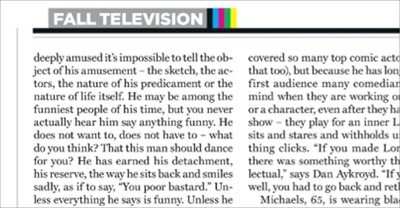
Last night I was reading through the latest issue of Rolling Stone — really loved the cover feature on Mad Men, as well as the profile on SNL creator Lorne Michaels — and seeing how they branded the issue’s theme (“Fall Television”) made me wonder just how relevant that particular imagery really is these days. The branding in question is what you see pictured above — it appears with all of the TV-related articles in the issue — and is of course inspired by the TV test patterns of old (pictured below, and technically known as “SMPTE color bars,” as I learned through Wikipedia).
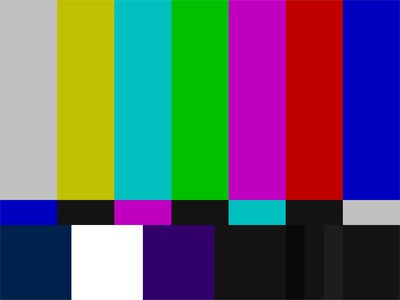
Television Test Pattern

As a retro effect, it works — I certainly remember them — but has anyone under the age of 20 ever seen one? As far as I know — and keep in mind that I’ve been living in Japan for 10+ years — they haven’t been used in at least a decade, and not just because they’re not necessary anymore (in this world of digital sets), but also because we live in a world with 24-hour broadcasts.

I’m just curious as to whether it’s still a good icon or image to use when referring to TV, although I’m the first to admit that I liked how it was used, and I can’t think of anything off-hand that would work better.

Have something to add? Feel free to leave feedback through either Twitter or Facebook, or contact me by email.

Tagged: , , , , , ,

PauseTalk

PauseTalk is a regular series of events that take place at Cafe Pause on the first Monday of every month, with a start time of 20:00. The idea is to create a forum where Tokyo-based creatives can get together and discuss their own projects, as well as cultural currents of the city. The next edition happens June 4.

We hereby define a new term, that of the magaziner, described as a person who exerts an unhealthy amount of love for all things magazine. The Magaziner is a site that mostly focuses on the intersection between magazines and the digital frontier, and what it means for the medium. This does not preclude the inclusion of a healthy amount of print love.

Codex is a weekly music podcast hosted by Jean Snow, recorded in Tokyo. Playlists for all episodes are posted on the site, and you can subscribe to RSS feeds of posts and episodes.

Jean Snow is a contributor to Arcade Mania, your guide to the arcade gaming scene in Japan (Amazon US/Amazon Japan). He also provided assistance on Tokyolife: Art and Design, a guide to Tokyo's cultural output of the past few years, covering the works of over 80 influential creatives.
He will be contributing to the upcoming fifth editions of The Rough Guide to Tokyo and The Rough Guide to Japan, due for release in 2011.
PechaKucha

Jean Snow is Executive Director of the PechaKucha organization. He also helps run the PechaKucha Night in Tokyo -- please get in touch if you are interested in presenting at a future event. For a more intimate salon-like discussion group, join him at his monthly PauseTalk event.

A longtime resident of Tokyo, he lives and breathes design, pop culture, and gaming, sustained by an unhealthy addiction to magazines and frequent visits to his favorites cafes. He has reported on these obsessions for various online/offline publications, including the following: Time, Inside (Australian Design Review), Gizmodo, Gridskipper, Kotaku, 1UP, Tokyo Q, Superfuture, OK Fred, Arthur Frommer's Budget Travel, I.D. (International Design), Metropolis, Azure, MoCo Loco, Kateigaho International Edition, Wired's Game|Life, PingMag, CNNGo, Phaidon, and The Japan Times.

You can subscribe to an RSS feed of this site, and also follow him on Twitter and Facebook, or get in touch by email.


Colophon

The "Jean Snow" logo is written using the free Kirimomi Swash typeface. The "M31" logo is by Ian Lynam, and is part of a series of 31 unique designs. The site's design is based on the Grid Focus WordPress theme by Derek Punsalan.

Twitter