Icon

Your Guide to Design and Pop Culture in Tokyo

Thoughts on Omotesando Hills

Omotesando Hills

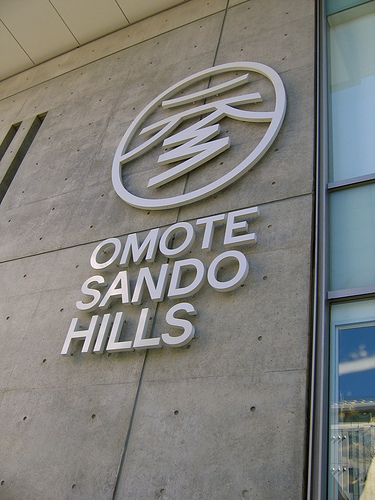
Omotesando Hills has garnered its fair share of critisism — it’s no secret that CrissCross’ Mark Devlin doesn’t like it much, as he’s stated in a METROPOLIS essay, and also in this comment thread, where he specifically points out problems — and since I had a chance to visit the place on opening day (and took plenty of photos), here are a few thoughts.

  • As I’ve said in the past, I have no real interest in the stores here, same as with Roppongi Hills. I’m not the target audience for this, and I can’t see myself going there often because of it. The basement floor does include a few non-clothing stores, but even then, a store like Delfonics gets turned into an upscale boutique. But, the Amadana store is nice (the Amadana products are so damn nice that it’s like walking through a gallery), Idea Frames has a good selection of items (but nothing you won’t find elsewhere), and then there’s the Taschen store (but it’s only open until May).
  • One pleasant surprise, and something I wasn’t expecting at all, was the presence of a few gallery spaces. There were two on the front side of the complex (with access directly from the street), and then two in the east wing (one devoted to an exhibition of the old Dojunkai complex, and the other, Galerie 412, returning from the Dojunkai days, bringing its original shop door with it).
  • As someone pointed out in a comment thread, yeah, it’s a mall, and it does feel like one. Admittedly, I was there on opening day, and the huge crowds didn’t help.
  • Now, the big question is regarding its architectural resonance. The opinion of most is that it’s this big ugly thing. Well, I think that as a whole, it works better than Roppongi Hills, but it’s not ideal. Sure, it doesn’t have the atmosphere of the old Dojunkai buildings, and does seems a bit tame for an Ando creation. Also, it’s a shame that there is no access to the rooftop garden (the small terraces on one end of the complex just don’t do it). I do like the ramp system found in the main area, which guides you as you walk around and window shop. It’s not an eyesore, but it doesn’t really measure up to the design originality of the other big-name flagship stores in the area.
  • They have a closed-off smoking room, so you need to give them a few points for that (and then close to it a smoke-free resting lounge). Also, plenty of bicycle parking spaces within the complex (with mounting racks).
  • Oh, and as a bit of trivia, the OH ad campaign (with the illustration of people walking) is by Julian Opie.

So a few first impressions. I’m not in love with the place, but my likeness for novelty makes it so that I can’t be against re-doing parts of the city — I do get excited by the creation of these big complexes (and there are quite a few more on the horizon). I do agree with a reader who mentioned that one scary aspect of all this is seeing Mori having too strong an impact on the Tokyoscape, and I certainly don’t want to see my beloved town turned into a collection of “Hills.” I do look forward to going back to OH on a less crowded day to have a second look.

Category: Architecture, Stores

Tagged:

13 Responses

  1. travis says:

    I love ando’s materials. The glass and concrete are beautiful I think.

    the only problem I can see with the building right now is it’s lack of environmental concern (or at last anything I’ve heard) Why does a small shopping space like this need a parking lot in a city like Tokyo? Norman Foster’s Gerkhin did away with it completely, not to mention its high accessibility to the subway. Part of the experience of omotesando is the stroll, and I really don’t think they should be encouraging (north) American-type take-the-car-to-the-mall culture. A green roof and universal access to a top floor garden would have been more than environmental, but also aestehtically appealing, and would have looked great contrasted with the glass and concrete.

  2. Jean Snow says:

    I also like concrete/glass, and it’s certainly one of Ando’s strenghts.

  3. Roy says:

    In response to Travis’ comment. While I don’t think I would ever drive to Omotesando Hills. More parking in Tokyo anywhere is a good idea IMO. Too many people park all over the place causing traffic jams.

    You have to also think about people who drive because it’s harder to take public transporation. I mean like disabled people or mothers who have strollers and young kids to carry around.

  4. Guy says:

    Thanks for the pictures and comments.. It looks interesting, but.. yuck.

    Why not more trees and natural light?.. They installed lights to make it look natural?..

    I’m sure I’d ‘appreciate’ it more if I saw it in person, but I’m tired of concrete prison architecture; I live in a box. Why would I want to shop in a box? ;)

    GJ

  5. travis says:

    i don’t think it’s particularly suprising that ando’s building is the way it is. One of his trademaraks is closing out the exterior world, and creating something different on the inside (I don’t like thinking of that as being a ‘concrete prison’). I’m not attacking or defending that. Omotesando is a kind of living museum of japanese architects, and ando has been missing (to my knowledge) on the street. I don’t know if Ando was the appropriate choice for this project or not, and Mori specifically chose ando without a competition, and his absence may have been a factor. It would have been fun to see how SANAA or someone might have used the space if there actually had been a competition….

    As for parking, I disagree, and actually wish Tokyo would encourage similar driving restrictions that London has instututed. If the subway isn’t convenient, then there are handicap buses, and taxis. Tokyo has amazing public transportation, and I think the majority of the people driving are doing it for the status it holds, not because of the necessity (you probably won’t see many k-cars, or domestically made cars at that, in that parking lot)

  6. Steve says:

    I do not live in Japan, so I visited Omotesando Hill’s web site. There is something really funny there, which I guess is an error noone really yet has discovered. But it just fits into the ongoing discussion about Omotesando Hills on this site and other blogs. Some people find the architecture quite “empty”. Well, it looks nice on picutures and I must say I should really visit it in person to judge on it, but just take some moments to watch this brilliant video that can be found on Omotesando Hill’s Website:

    http://www.omotesandohills.com/about/index.html

    Wait for it to load, then go to “Concept” -> “Introduction” in the Japanese Version of the site and wait for the video to start playing.

    So it starts in 1920 going through the centuries. Some neatly composed music piece accompanies the viewer in the path through history. Then comes 2006 and the screen goes pitch black. The music continuous, but the screen… well it remains black until the final end…

    Either someone forgot to check that the video is not playing all the way through or the video is trying to show that after all these years of histor, a “dark era” has started with 2006 on Omotesando Street ;-)

    Have fun, Steve

  7. Jean Snow says:

    Hahahaha… The joke’s on Mori!

  8. davido says:

    I haven’t read every criticism of this, so I might be repeating here (I think Devlin’s “Tree Museum” argument is fair, and Momus’ ‘it is what it is’ is also fair). The aspect that bothers me most at first glance is the idea of “quite a few more” complexes of shops that are out of reach for most people.

  9. moci says:

    is it right that OH fas already been abandoned by now? i mean is it not prospective no more to rent a space in that mall?

  10. Jean Snow says:

    No, I don’t think it’s been abandoned. It’s only a year old!

  11. Fletcher says:

    I still find the place almost too painful to look at because it has essentially created dead space along a huge chunk of my beloved boulevard. Yes, I am perhaps biased because I was around when the old apartments were there, and used to clamber up on the roof and drink wine with my friends. I even tried to rent an apartment there but was told that the place was slated for demolition (this was in ‘94).

    From the outside, it appears almost literally to be a wall. The first time I walked by it, I had trouble finding the entrance. The first opening I found led me down into a basement area with a couple shops. A dead end — how fitting.

    To my eyes, it is cold, forbidding and a monumental waste. It is a glass and concrete wave frozen at its apex, menacingly poised above our heads, forever threatening to engulf the stately zelvokas.

  12. friendsofthefruitsofsin says:

    Puleeeezzze. this piece of work, bwahahaha go out and take a walk through Tokyo, or other areas of Japan and see what Kenzo Tange accomplished with Concrete and glass! Now there is talent and growth of an idea. “Tadao Ando did not invent concrete!” a great quote by Zaha Hadid. All he makes with it are American suburban household basements. Where is the talent in that?

  13. Jean Snow says:

    No one is saying that this is an architectural marvel, but it was high-profile project, and I tried to find some good and bad (in general, I’m not a particular fan of the building).

Leave a Reply

PauseTalk

PauseTalk is a regular series of events that take place at Cafe Pause on the first Monday of every month, with a start time of 20:00. The idea is to create a forum where Tokyo-based creatives can get together and discuss their own projects, as well as cultural currents of the city. The next edition happens in March.

PLAY is a series of events with Jean Snow spinning some of his favorite virtual discs in a casual setting at Cafe Pause. The next edition happens in January. See the setlist for previous editions here, and subscribe to a feed of the mixes.
Game

Being a survey of recommended titles for your gaming pleasure. New games are added 2-3 times weekly, and all selections are by your host, Jean Snow, a Tokyo-based writer and gamer.

Jean Snow is a contributor to Arcade Mania, your guide to the arcade gaming scene in Japan (Amazon US/Amazon Japan). He also provided assistance on Tokyolife: Art and Design, a guide to Tokyo's cultural output of the past few years, covering the works of over 80 influential creatives.
He will be contributing to the upcoming fifth editions of The Rough Guide to Tokyo and The Rough Guide to Japan, due for release in 2011.
Jean Snow lives and breathes design, pop culture, and gaming in Tokyo -- sustained by an unhealthy addiction to magazines and frequent visits to his favorites cafes. He has reported on these obsessions for the following online/offline publications: Time, Inside (Australian Design Review), Gizmodo, Gridskipper, Kotaku, Tokyo Q, Superfuture, OK Fred, Arthur Frommer's Budget Travel, I.D. (International Design), Metropolis, Azure, MoCo Loco, Kateigaho International Edition, Wired's Game|Life, PingMag, CNNGo, and The Japan Times. He also manages the gallery space at Cafe Pause.

He writes a monthly column covering Japanese product design for The Japan Times, called "On Design." It appears on the fourth Thursday of every month, in both the print edition and online.

Pecha Kucha Night

I'm also a proud member of the Pecha Kucha Night family, working on various projects, including updating Pecha Kucha Daily, a blog that highlights the creativity coming out of PKN events worldwide.

PauseTalk

I serve as editor-at-large at Néojaponisme, a web journal covering social and cultural aspects of Japan. Read the manifesto, by founder and chief editor W. David Marx.

Colophon

The "Jean Snow" logo is made up of the Blackout open source typeface. The "M31" logo is by Ian Lynam, and is part of a series of 31 unique designs. The site's design is based on the Grid Focus WordPress theme by Derek Punsalan.

Twittering